
What is a consumer unit?
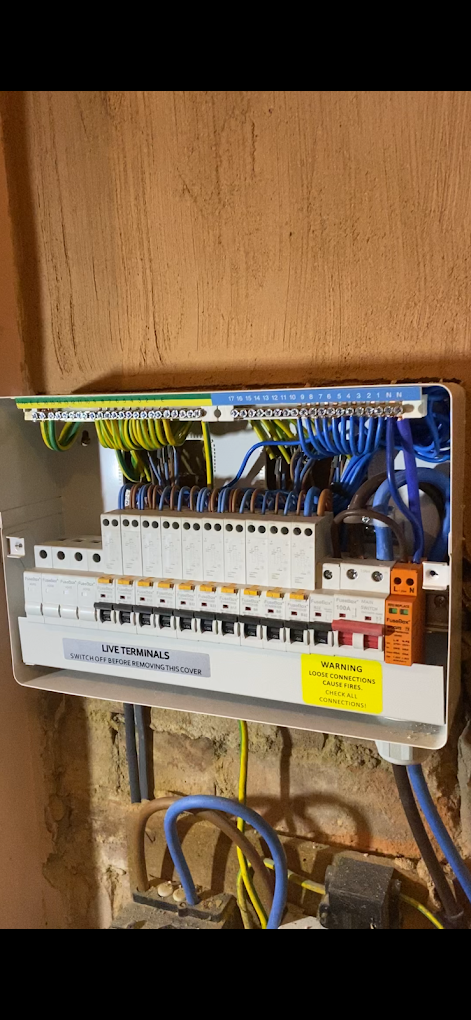
The consumer unit — commonly called a fuse box or fuse board — is the main electrical panel in your property. It is where the electricity supply enters and is distributed to individual circuits. A modern consumer unit contains MCBs and RCDs that protect each circuit from overload, short circuit, and earth faults.
When does a consumer unit need replacing?
- The board contains old rewireable fuse wire rather than modern MCBs
- There is no RCD protection — required by current standards for most circuits
- An EICR has identified the consumer unit as requiring upgrade (C1 or C2)
- The board is physically damaged, corroded, or showing signs of overheating
- Circuits are tripping frequently without a clear external cause
- The board is overcrowded with no spare ways for additional circuits
For more detail on the warning signs, see our guide on when to replace a fuse box.
Why RCD protection matters
A residual current device (RCD) monitors the current flowing through a circuit and cuts the supply within milliseconds if a fault is detected. Older consumer units often have no RCD at all. Current standards require RCD protection across most domestic circuits. A new consumer unit resolves this in full.
What the replacement involves
- We isolate the supply and remove the existing board
- The new consumer unit is fitted and all circuits are reconnected
- Each circuit is individually tested to confirm correct operation
- The board is clearly labelled for each circuit
- An Electrical Installation Certificate is issued on completion
- The work is notified to Building Control under Part P
Does a new consumer unit mean the wiring is fine?
Not necessarily. A consumer unit replacement addresses the protection at the distribution board — it does not change the condition of the cables. An EICR will give you a clear picture of both. If both need attention, we will advise whether a full or partial rewire alongside the board replacement is the more sensible approach.